
Methodology
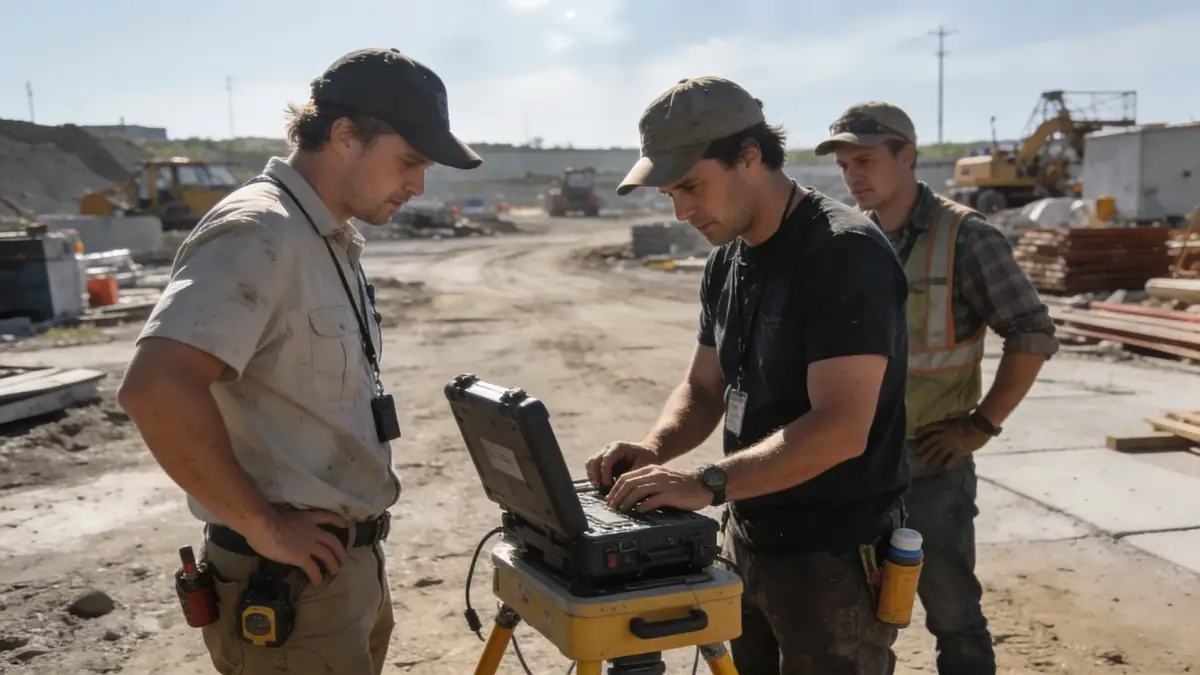
Our methodology for geotechnical engineering in Houston integrates office-based review of regional geology and published boring logs with field exploration programs tailored to each site. We conduct spt boring at 1.0–1.5 m intervals per ASTM D1586, supplemented by undisturbed tube sampling for laboratory testing. The soil mechanics laboratory performs classification, strength, and consolidation tests on representative samples to characterize the highly plastic Beaumont and Lissie formations. We also evaluate groundwater depths, typically ranging from 1.5 to 4.5 m, and assess liquefaction potential for seismic design. Our findings are synthesized into clear geotechnical reports that address foundation bearing capacity, settlement estimates, lateral earth pressures, and construction considerations specific to Houston's challenging subsurface conditions.
Reference Technical Parameters
| Parameter | Reference Value |
|---|---|
| Predominant soil type | Fat clay (CH) and silty sand (SM) |
| Maximum seismic acceleration (PGA) | 0.10–0.15 g (ASCE 7) |
| Typical groundwater level | 1.5–4.5 m below ground surface |
| Bedrock depth | > 300 m (Gulf Coast Basin) |
| Typical N60 range (SPT) | 4–25 blows/ft (clay), 10–40 blows/ft (sand) |
Local Considerations — Houston
Houston's geology is dominated by the Beaumont and Lissie formations, which consist of overconsolidated clays with high plasticity and interbedded sands. These clays experience significant volume changes with moisture variation, leading to differential movement in lightly loaded structures. The shallow water table, often within 2 m, complicates excavation and requires dewatering for deep foundations. Seismic design follows ASCE 7, with peak ground accelerations up to 0.15 g, necessitating liquefaction assessment in loose saturated sands. Typical failure modes include foundation heave in dry periods and settlement after wetting, as seen in the Memorial area. For these reasons, our firm emphasizes thorough subsurface exploration and slope stability analysis when grading or cut slopes are involved.
Request a Quote
Our team reviews your project and issues an initial report at no cost.
Or write us directly at [email protected]
Services in Houston
Locations covered in Houston
Applicable Standards
- ASTM D1586 (Standard Test Method for Standard Penetration Test)
- ASTM D698 (Standard Proctor Compaction)
- ASCE 7 (Minimum Design Loads for Buildings and Other Structures)
- International Building Code (IBC) – Houston Amendments
- City of Houston Public Works Design Manual
Frequently Asked Questions
What are the dominant soil types in Houston and how do they affect foundation design?
Houston soils are primarily high-plasticity clays (CH) and silty sands (SM). The clays, part of the Beaumont Formation, exhibit significant shrink-swell potential, requiring deep piers or drilled shafts to bypass the active zone. Sands are more common along bayous and generally support shallow foundations, though groundwater and liquefaction must be considered.
Does Houston have seismic design requirements?
Yes, Houston falls under Seismic Design Category B per ASCE 7, with mapped spectral accelerations (SDS) around 0.15 g for short periods. While not a high-seismicity region, site-specific response analysis is required for critical facilities. Liquefaction assessment is mandatory for loose saturated sands, particularly near the coast.
Is a geotechnical investigation mandatory for construction in Houston?
City of Houston building code does not mandate geotechnical reports for all projects, but they are strongly recommended for commercial structures and subdivisions. Many lenders and design professionals require them to manage risk. For expansive clay sites, a report is essential to determine foundation type and depth, and to comply with the IBC.