Methodology
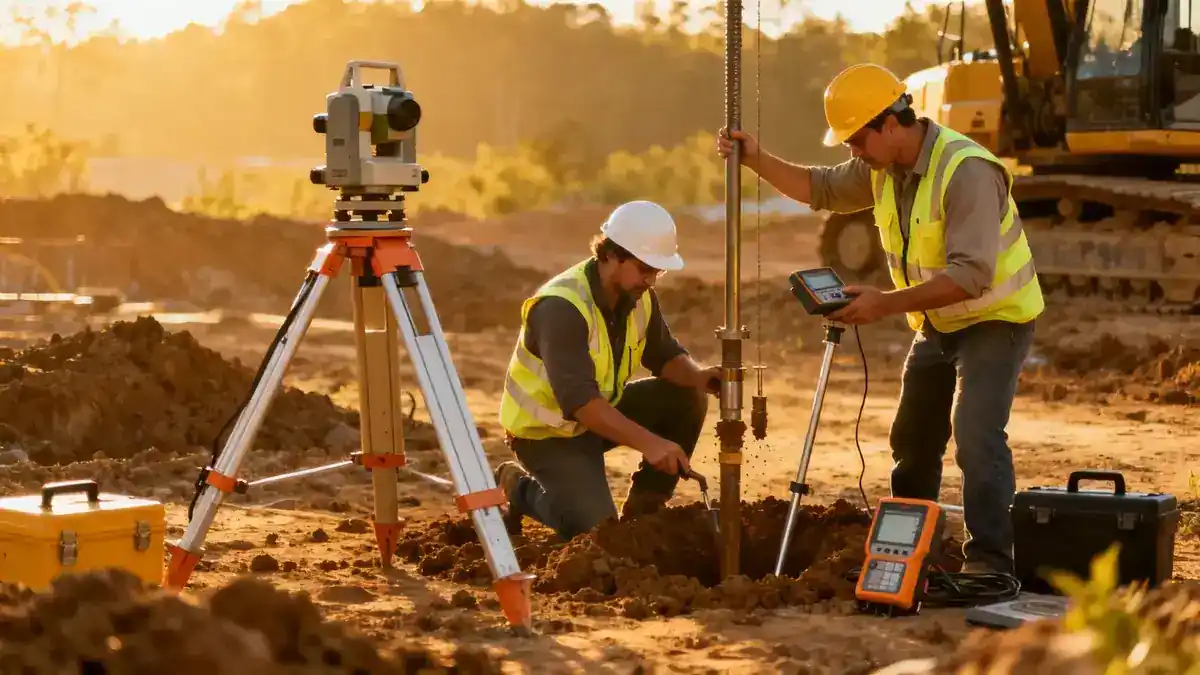
Our approach to geotechnical engineering in Wilmington Delaware integrates standard penetration testing (SPT) per ASTM D1586, continuous sampling, and laboratory analysis. SPT borings are advanced at 1.0–1.5 m intervals to obtain N60 values and disturbed samples. For critical structures, we supplement with cone penetration testing (CPT) for continuous stratigraphic profiling. All field data are correlated with local geological maps and historical groundwater records to develop accurate subsurface models. Laboratory tests include grain size distribution, Atterberg limits, and direct shear, ensuring compliance with project-specific requirements. This methodology supports reliable foundation design across Wilmington Delaware.
Reference Technical Parameters
| Parameter | Reference Value |
|---|---|
| Predominant Soil Type | Silty sands and clays (Columbia Formation) |
| Maximum Seismic Acceleration (PGA) | 0.15g (ASCE 7-16, Site Class D) |
| Typical Groundwater Level | 2–5 m below grade |
| Bedrock Depth | >30 m (no bedrock encountered) |
| Typical N60 Range | 5–25 blows/0.3 m |
Local Considerations — Wilmington Delaware
Wilmington Delaware's subsurface is dominated by unconsolidated sediments of the Atlantic Coastal Plain, with the Columbia Formation comprising sands, silts, and clays of variable density. The water table is shallow (2–5 m), requiring dewatering considerations for excavations. Seismic site classification per ASCE 7 typically results in Site Class D (stiff soil) with a PGA of 0.15g, influencing liquefaction assessments in saturated loose sands. Historic fill materials are common in the downtown area, necessitating careful investigation for bearing capacity and settlement. Our team integrates these factors into practical recommendations, drawing on our experience from geotechnical engineering in Philadelphia to address similar coastal plain conditions.
Request a Quote
Our team reviews your project and issues an initial report at no cost.
Or write us directly at [email protected]
Services in Wilmington Delaware
Applicable Standards
- ASTM D1586 (Standard Penetration Test)
- ASCE 7-16 (Minimum Design Loads for Buildings)
- IBC 2021 (International Building Code)
- Delaware State Building Code
Frequently Asked Questions
What are the typical soil conditions for foundation design in Wilmington Delaware?
Soils in Wilmington Delaware are predominantly silty sands and clays of the Columbia Formation, with loose to medium density. The water table is shallow, often 2–5 m deep. Bearing capacities vary widely, requiring site-specific SPT borings and laboratory testing per ASTM D1586 to determine allowable values.
Is seismic design required for structures in Wilmington Delaware?
Yes, Wilmington Delaware falls under Seismic Design Category B per ASCE 7, with a PGA of 0.15g. Site Class D (stiff soil) is common. Although seismic risk is moderate, liquefaction assessment is recommended for saturated loose sands, especially near the Christina River.
Are geotechnical studies mandatory for construction in Wilmington Delaware?
The Delaware State Building Code requires geotechnical investigations for most new structures, particularly those with shallow foundations, basements, or significant loads. A geotechnical report is typically needed to obtain a building permit, ensuring compliance with bearing capacity and settlement criteria.