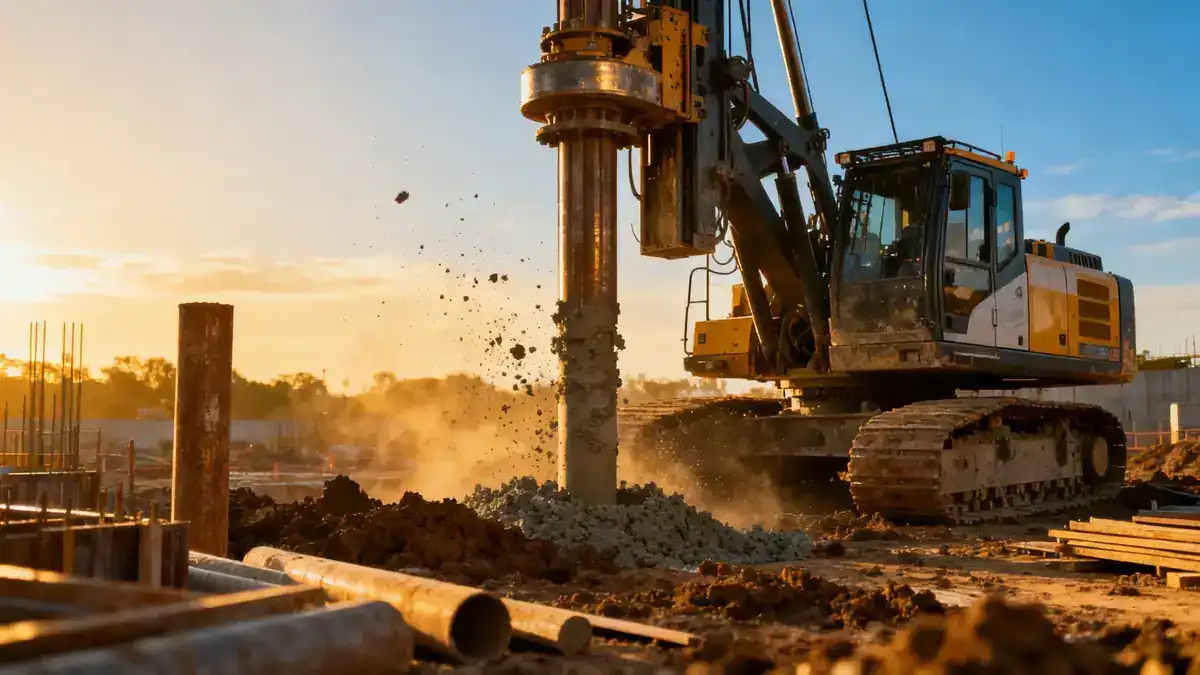
Methodology

Our geotechnical engineering approach in Trenton New Jersey begins with a comprehensive desktop study of existing geologic maps and historical records, followed by a field exploration program. We perform spt boring to obtain soil samples and measure N-values at regular intervals, typically every 1.5 meters per ASTM D1586. Advanced laboratory testing classifies soil properties, including grain size distribution and Atterberg limits. For seismic assessments, we evaluate site class per ASCE 7 based on shear wave velocity or N60 profiles. Our methodology adapts to Trenton's variable conditions—from deep glacial deposits to shallow bedrock near the fall line—ensuring each project receives a tailored investigation plan.
Reference Technical Parameters
| Parameter | Reference Value |
|---|---|
| Predominant soil type | Glacial till (silty sand & gravel) with alluvial deposits along river |
| Maximum seismic acceleration (PGA) | 0.15–0.20 g (ASCE 7, Site Class D) |
| Typical groundwater level | 2–5 m below grade (higher near Delaware River) |
| Bedrock depth | Variable, 5–30 m (shallow in northern Trenton) |
| Typical N60 range | 8–30 blows/ft (glacial till); 2–10 blows/ft (alluvial deposits) |
Local Considerations — Trenton New Jersey
Trenton's geology is shaped by the Fall Line, where the Piedmont's crystalline bedrock meets the Coastal Plain's sedimentary layers. In northern neighborhoods like Battle Monument, shallow bedrock often requires rock excavation or deep foundations. Conversely, southern areas near the Delaware River feature deep alluvial deposits with high groundwater, demanding dewatering and settlement control. Our team has extensive experience navigating these contrasts, from historic building retrofits to new waterfront developments. For regional context, we coordinate with our geotechnical engineering en Philadelphia office to leverage broader insights into the Delaware Valley's subsurface conditions. We also provide soil mechanics laboratory testing to characterize local soils accurately.
Request a Quote
Our team reviews your project and issues an initial report at no cost.
Or write us directly at [email protected]
Services in Trenton New Jersey
Applicable Standards
- ASTM D1586
- ASCE 7
- IBC 2021
- NJDEP Soil Erosion and Sediment Control Standards
Frequently Asked Questions
What soil types are commonly found in Trenton New Jersey?
Trenton features glacial till (silty sand and gravel) in the north and alluvial deposits (soft silt, clay, sand) along the Delaware River. The Fall Line transition causes abrupt changes, requiring site-specific exploration.
Does Trenton New Jersey have strict seismic design requirements?
Yes, New Jersey adopts the IBC with ASCE 7 seismic provisions. Trenton falls in Seismic Design Category B to C, with PGA up to 0.20g. Site class effects from soft soils can amplify ground motion, necessitating geotechnical seismic evaluations.
Are geotechnical studies mandatory for construction in Trenton New Jersey?
While not universally required for all projects, most municipalities in Mercer County enforce soil reports for new buildings and additions. The New Jersey Uniform Construction Code mandates geotechnical investigations for structures in seismic zones or with special foundations.