Methodology
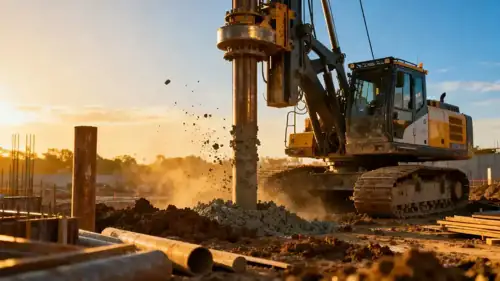
Our methodology for geotechnical engineering in Indianapolis begins with a thorough review of existing geological maps and historical data. We then perform subsurface investigations using methods such as spt boring and soil sampling, following ASTM D1586. Field data is complemented by laboratory tests on soil mechanics parameters. Analysis includes bearing capacity, settlement, and liquefaction potential. We integrate results with site-specific conditions to produce practical foundation designs and construction recommendations, ensuring compliance with local codes and safety standards.
Reference Technical Parameters
| Parameter | Reference Value |
|---|---|
| Predominant soil type | Glacial till (silty clay with sand and gravel) |
| Maximum seismic acceleration (PGA) | 0.15g (ASCE 7-16, Site Class D) |
| Typical groundwater level | 3 to 6 m below ground surface |
| Bedrock depth | 30 to 60 m (shale and limestone) |
| Typical N60 range (SPT) | 10 to 30 blows/0.3 m in till |
Local Considerations — Indianapolis
Indianapolis' geology is dominated by glacial till overlying bedrock of the New Albany Shale and limestone. The till is heterogeneous, with lenses of sand and gravel that can affect drainage and excavation stability. Seismic hazard is moderate, with a peak ground acceleration of 0.15g. Our team addresses these conditions through targeted investigations, often using soil mechanics laboratory testing to characterize soil behavior. For projects near the White River, we assess scour and high groundwater. For properties in the historic Mile Square, we evaluate fill and urban debris. Our integrated approach ensures safe and cost-effective designs across the city.
Request a Quote
Our team reviews your project and issues an initial report at no cost.
Or write us directly at [email protected]
Services in Indianapolis
Applicable Standards
- ASTM D1586 (Standard Test Method for Standard Penetration Test)
- ASCE 7-16 (Minimum Design Loads and Associated Criteria for Buildings and Other Structures)
- Indiana Building Code (IBC 2018)
- ASTM D2487 (Classification of Soils for Engineering Purposes)
Frequently Asked Questions
What are the typical soil conditions in Indianapolis?
Indianapolis has glacial till soils, primarily silty clay with sand and gravel. Bedrock depth ranges from 30 to 60 m. Groundwater is typically found at 3 to 6 m depth. These conditions require careful evaluation for foundation design.
Is seismic analysis required for projects in Indianapolis?
Yes, the Indiana Building Code adopts ASCE 7, which classifies Indianapolis as Seismic Design Category B or C depending on site class. A site-specific ground motion analysis may be needed for critical structures. Our team integrates seismic considerations into every project.
Are geotechnical studies mandatory for construction in Indianapolis?
While not always legally required for all projects, geotechnical studies are strongly recommended and often mandated by lenders or design professionals. They help mitigate risks such as settlement, slope instability, and liquefaction, ensuring long-term performance.