Methodology
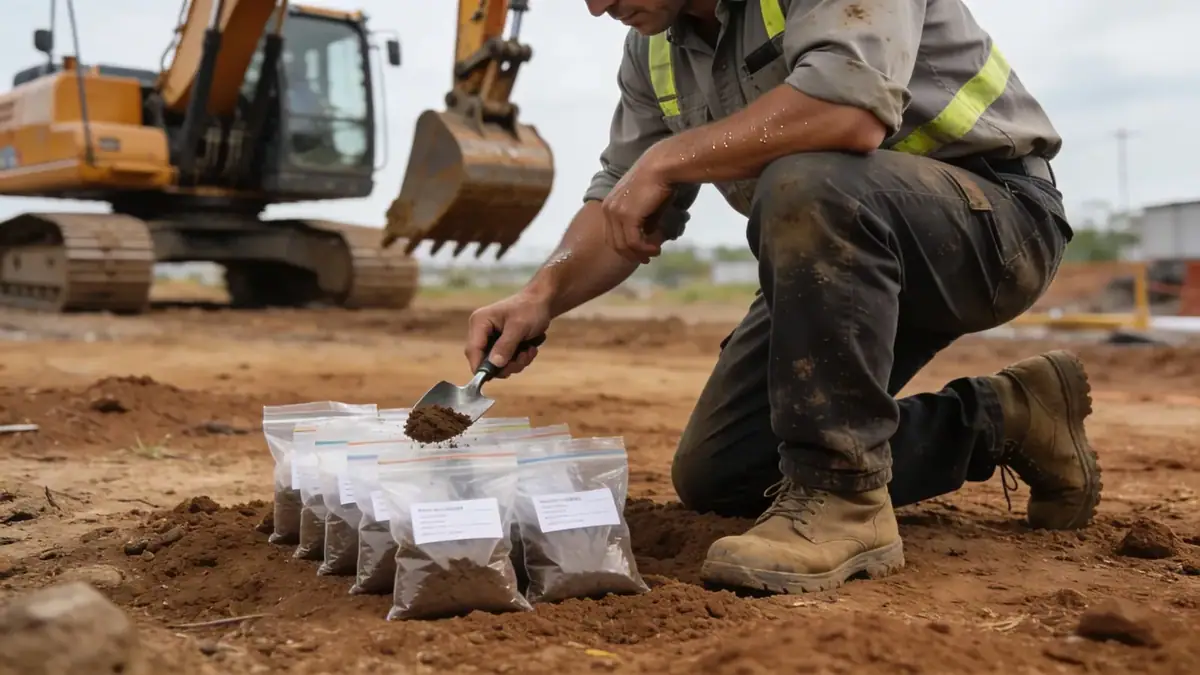
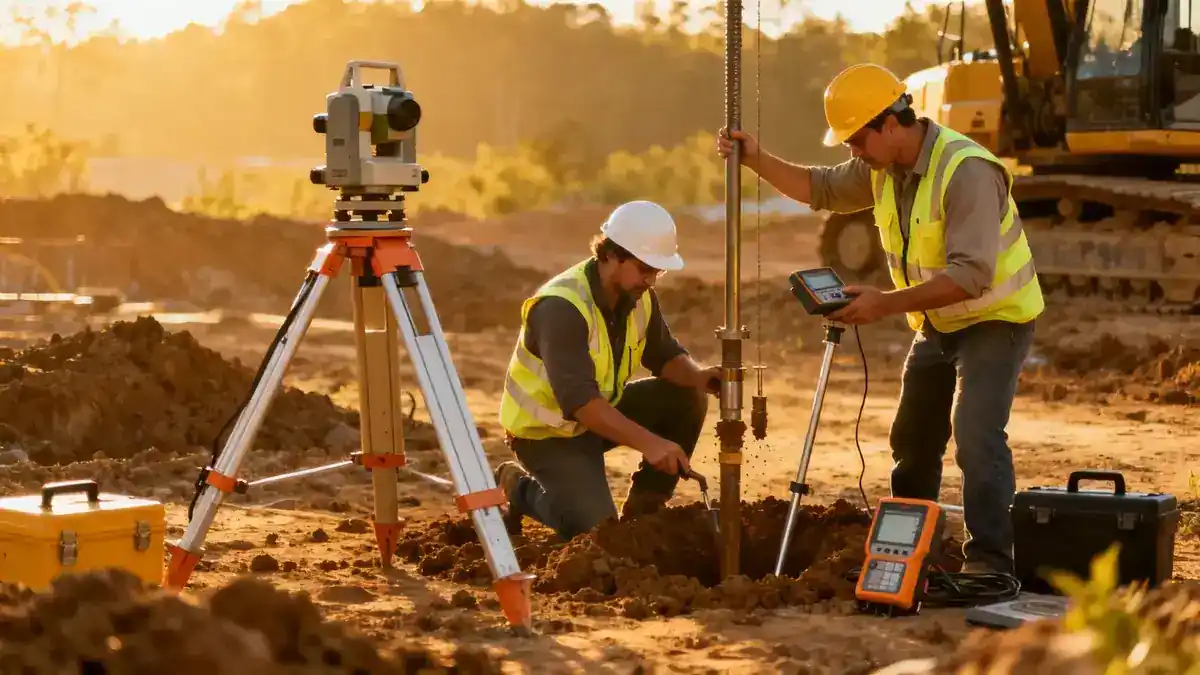
Our methodology for geotechnical engineering in Durham integrates standard penetration testing (SPT) per ASTM D1586 with continuous soil sampling and laboratory analysis. We perform SPT boring at strategic intervals to characterize subsurface strata, typically advancing borings to depths of 8–15 m for low-rise structures and up to 30 m for heavier loads. Field data are supplemented with in-situ groundwater monitoring and seismic refraction surveys to assess dynamic properties. This comprehensive approach ensures reliable bearing capacity estimates and settlement predictions for foundations in Durham's Piedmont geology.
Reference Technical Parameters
| Parameter | Reference Value |
|---|---|
| Predominant soil type | Residual silty sands and clayey sands (SM, SC) |
| Maximum seismic acceleration (PGA) | 0.15–0.20 g (ASCE 7-16) |
| Typical groundwater level | 3–8 m below grade |
| Bedrock depth | 5–15 m (weathered to competent) |
| Typical N60 range | 10–30 blows/0.3 m |
Local Considerations — Durham
Durham sits on the Piedmont Plateau underlain by metamorphic and igneous bedrock, with residual soils varying from silty sands to clayey sands. Shallow groundwater (3–8 m) and steep bedrock profiles create challenges for foundation design, particularly in western areas near the Eno River. Our team integrates local geological maps with site-specific soil mechanics laboratory testing to address shrink-swell potential and slope stability. For projects requiring regional context, we coordinate with our main office offering geotechnical engineering en Philadelphia to leverage broader expertise.
Request a Quote
Our team reviews your project and issues an initial report at no cost.
Or write us directly at [email protected]
Services in Durham
Applicable Standards
- ASTM D1586 (Standard Penetration Test)
- ASCE 7-16 (Minimum Design Loads for Buildings)
- North Carolina Building Code (IBC 2018-based)
- ASTM D2487 (Unified Soil Classification System)
Frequently Asked Questions
What soil types are common in Durham for foundation design?
Durham soils are predominantly residual silty sands (SM) and clayey sands (SC) derived from weathering of metamorphic bedrock. These materials often exhibit variable strength and compressibility, requiring careful evaluation through SPT and laboratory testing to determine suitable bearing capacities.
Does Durham have specific seismic design requirements?
Yes, Durham falls under Seismic Design Category B per ASCE 7-16, with a maximum considered earthquake spectral acceleration (SDS) of approximately 0.20–0.25 g. Site-specific response spectra may be required for critical facilities, and our team incorporates these parameters into foundation and slope stability analyses.
Are geotechnical studies mandatory for construction in Durham?
While not always legally required for all projects, most local building officials and lenders strongly recommend a geotechnical investigation. For structures with unusual loads, slopes, or expansive soils, a site-specific study is essential to ensure safety and avoid costly repairs.